
What Is D-Limonene? A Complete Guide to Nature’s Most Versatile Compound

Open a fresh orange and breathe in. That bright, clean, unmistakably citrus burst that fills the air in an instant — the scent that seems to lift your mood before you’ve consciously registered what you’re smelling — that is d-limonene announcing itself. It is one of the most abundant, most studied, and most remarkably versatile naturally occurring compounds on Earth, and its story reaches from the peel of a humble citrus fruit into the worlds of industrial chemistry, medicine, neuroscience, environmental science, and consumer products in ways that continue to surprise even the scientists who study it most closely.
The Basic Definition
D-limonene is a naturally occurring organic compound classified as a cyclic monoterpene — a member of the vast terpene family, the largest and most chemically diverse class of natural compounds produced by living organisms. Its chemical formula is C₁₀H₁₆, and its molecular structure consists of two isoprene units arranged in a six-membered carbon ring with a terminal double bond — a configuration that gives it both its distinctive aromatic properties and its remarkable chemical reactivity.
The “d” in d-limonene refers to its chirality — its three-dimensional molecular geometry. D-limonene is the dextrorotatory form of limonene, meaning it rotates polarized light to the right. Its mirror-image counterpart — l-limonene — rotates light to the left and smells distinctly of pine or turpentine rather than citrus, a remarkable demonstration of how identical atomic composition can produce completely different sensory and chemical properties depending solely on molecular geometry.
In nature, d-limonene is the dominant form — comprising roughly 90 to 95 percent of the essential oil found in the peel of oranges, and present in significant quantities in lemons, limes, grapefruits, tangerines, and virtually all other citrus fruits. It is also found, in smaller concentrations, in caraway seeds, dill, bergamot, rosemary, peppermint, and numerous other botanicals.
Where D-Limonene Comes From
In the citrus fruit, d-limonene is produced and stored in specialized microscopic oil glands embedded in the flavedo — the colored outer layer of the peel, commonly called the zest. These glands, visible to the naked eye as tiny translucent dots in a fresh orange peel, are essentially miniature chemical factories that synthesize and store terpene compounds throughout the fruit’s development.
The tree produces d-limonene for several biological purposes — as a defense mechanism against insects and fungal pathogens, as an attractant for pollinators, and as a deterrent against herbivores. The compound is toxic to many insects at the cellular level, disrupting their nervous systems with remarkable efficiency, while remaining essentially non-toxic to mammals at normal exposure levels. This biological function — protecting the fruit that carries the tree’s seeds — is the evolutionary origin of a compound that human civilization has found an astonishing range of uses for.
Commercial Extraction
D-limonene is extracted commercially as a byproduct of the citrus juice industry — one of the most elegant examples of circular economy thinking in modern food processing. When oranges are pressed for juice, the peel — which would otherwise be a waste product requiring disposal — is subjected to cold-pressing or steam distillation to extract its essential oil content.
The global orange juice industry processes hundreds of millions of tons of oranges annually, generating an enormous volume of peel from which d-limonene can be recovered. Brazil and the United States — the world’s two largest orange juice producers — are consequently the primary sources of commercially produced d-limonene, with Florida’s citrus processing industry historically representing a significant portion of global supply.
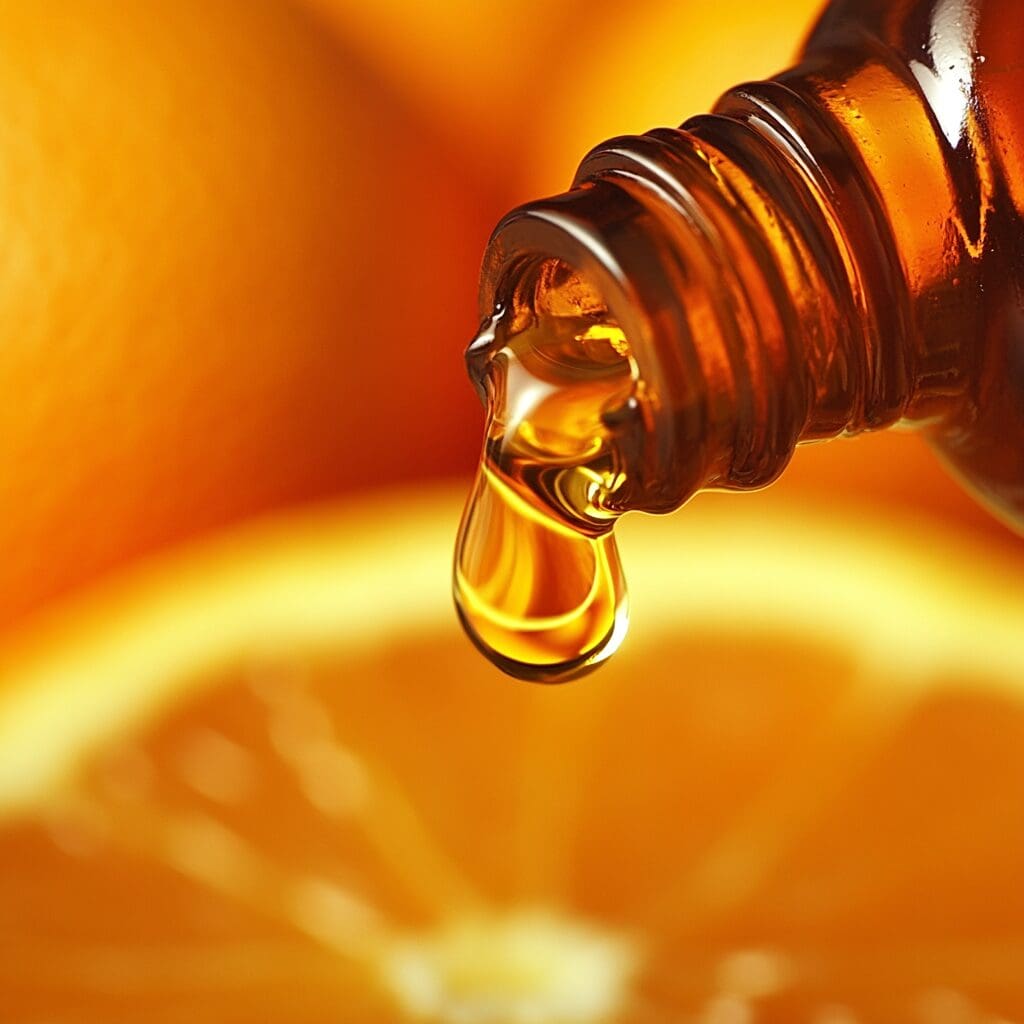
The extraction process is straightforward: cold-pressing mechanically ruptures the oil glands in the peel, releasing the essential oil, which is then separated from the aqueous press liquor through centrifugation. Steam distillation provides an alternative method that produces a slightly different aromatic profile. Both processes yield a golden to pale yellow liquid with the characteristic bright citrus aroma that makes d-limonene one of the most immediately recognizable natural extracts in commerce.
The Chemistry of D-Limonene
Understanding d-limonene’s extraordinary versatility requires a brief excursion into its chemistry — because it is the molecule’s specific structural features that explain why it can simultaneously serve as a food flavoring, an industrial solvent, a potential anti-cancer compound, and a mood elevator.
The Terpene Framework
As a monoterpene, d-limonene is built from two isoprene units — the five-carbon building blocks from which all terpenes are constructed. The cyclization of these units into the characteristic six-membered ring creates a molecule that is simultaneously:
Hydrophobic — it repels water and is attracted to oils, fats, and hydrophobic polymers. This property underlies its solvent action, allowing it to penetrate and dissolve oily, greasy, and polymer-based substances that water cannot touch.
Volatile — its relatively low molecular weight and the energy of its double bond make it readily evaporable at room temperature, which is why the scent of a peeled orange fills a room so rapidly and why it can be detected by olfactory receptors from molecules dispersed through air.
Chemically reactive — the terminal double bond in d-limonene’s structure makes it susceptible to oxidation, which is both a liability (oxidized limonene can become a skin sensitizer) and an asset (the oxidation products have their own useful chemical properties and d-limonene serves as a chemical feedstock for numerous synthetic reactions).
Biologically active — the same structural features that make d-limonene an effective natural pesticide also allow it to interact with biological receptors in ways that produce measurable physiological effects in mammals, including humans.
D-Limonene as an Industrial Solvent
Perhaps the most commercially significant application of d-limonene — and the one that has most dramatically expanded its industrial footprint in recent decades — is its use as a natural solvent capable of replacing petrochemical-derived solvents in numerous industrial cleaning and processing applications.
How It Works as a Solvent
D-limonene’s solvent action follows a fundamental principle of chemistry: like dissolves like. Because d-limonene is a hydrocarbon — built entirely from carbon and hydrogen atoms — it is chemically similar to the petroleum-based substances, polymer adhesives, and hydrocarbon residues that constitute some of the most stubborn cleaning challenges in industrial environments.
When d-limonene contacts a petroleum-based substance — road tar, asphalt, crude oil, grease, or hydrocarbon-based adhesive — it penetrates the substance at a molecular level, interacting with the hydrocarbon chains that hold the material together and disrupting the intermolecular forces that give it its adhesive or cohesive properties. The result is softening, dissolution, and ultimately the release of the target substance from whatever surface it has bonded to.

Industrial Applications
The list of industrial applications where d-limonene has successfully replaced conventional petroleum solvents or chlorinated compounds is extensive and continues to grow:
Asphalt and tar removal — d-limonene-based solvents are widely used in road construction and maintenance for removing asphalt and tar from equipment, vehicles, and tools. The compound’s ability to penetrate and dissolve bituminous hydrocarbons — the same chemical family as asphalt — makes it exceptionally effective for this application while eliminating the health and environmental risks of traditional petroleum solvents.
Industrial degreasing — manufacturing facilities, automotive shops, and industrial kitchens use d-limonene-based degreasers to remove oil, grease, and lubricant residues from machinery, parts, and surfaces. The compound’s effectiveness against hydrocarbon-based soils combined with its biodegradability and low toxicity makes it particularly valuable in food processing environments where conventional chemical degreasers cannot be safely used.
Adhesive and mastic removal — flooring contractors and renovation professionals use d-limonene-based adhesive removers to dissolve carpet glue, floor mastic, contact cement, sticker residue, and construction adhesives from a wide range of surfaces including hardwood, concrete, tile, and metal. The compound’s ability to penetrate polymer-based adhesives and disrupt their bonding chemistry makes it effective on materials that mechanical removal alone cannot address without surface damage.
Paint and ink removal — d-limonene dissolves many oil-based paints, inks, and coatings, making it useful as a brush cleaner, press wash in printing operations, and graffiti removal agent in urban maintenance applications.
Electronics cleaning — the compound’s ability to dissolve flux residues from circuit boards without damaging electronic components has made it a preferred solvent in electronics manufacturing, where the toxicity of traditional solvents like trichloroethylene represents an unacceptable occupational health risk.
Parts washing — automotive and manufacturing facilities use d-limonene-based parts washers to clean metal components — replacing petroleum naphtha and chlorinated solvent systems with a biodegradable, non-carcinogenic alternative of comparable cleaning performance.
Environmental Advantages Over Conventional Solvents
The environmental profile of d-limonene represents one of its most significant advantages over the petrochemical solvents it replaces:
Biodegradability — d-limonene degrades rapidly in soil and water through microbial action, with a half-life measured in days rather than the weeks, months, or years characteristic of many chlorinated and petroleum solvents. This means spills and disposal are significantly less environmentally damaging than comparable events involving conventional industrial solvents.
Non-persistence — unlike persistent organic pollutants (POPs) such as PCBs and chlorinated solvents, d-limonene does not bioaccumulate in the food chain or persist in environmental matrices long enough to cause ecosystem-level damage.
Low aquatic toxicity — while d-limonene is toxic to aquatic organisms at high concentrations, its rapid biodegradation means that environmental exposures are typically brief and localized compared to persistent petrochemical alternatives.
USDA Certified Biobased — d-limonene qualifies for USDA BioPreferred program certification as a biobased product derived entirely from renewable biological sources, distinguishing it from petroleum-derived solvents in regulatory and procurement contexts.
D-Limonene in Food and Flavor
D-limonene is one of the most widely consumed flavor compounds in the human diet — present naturally in all citrus fruits and added as a flavoring agent to an enormous range of processed foods and beverages. It is recognized as Generally Recognized As Safe (GRAS) by the US Food and Drug Administration, reflecting its long history of safe human consumption and the extensive toxicological data supporting its safety profile.
In food applications, d-limonene contributes the characteristic bright, clean citrus note found in:
- Carbonated beverages and fruit drinks
- Candy and confectionery
- Baked goods and desserts
- Chewing gum
- Dairy products including ice cream and yogurt
- Savory foods and condiments
- Alcoholic beverages including gin, vodka, and liqueurs
Beyond its direct flavoring applications, d-limonene serves as a solvent and carrier for other flavor compounds and essential oils in the food manufacturing industry — its miscibility with lipophilic flavor molecules and its pleasant aromatic character make it a useful vehicle for delivering complex flavor profiles in finished food products.
D-Limonene in Personal Care and Cosmetics
The cosmetics and personal care industry is one of the largest consumers of d-limonene globally, using it across a wide range of product categories for its fragrance, solvent, and skin-conditioning properties.
Fragrance — d-limonene is a component of countless perfumes, colognes, and scented personal care products, contributing the bright top-note citrus character that opens many fragrance compositions. It is listed as a fragrance ingredient in shampoos, conditioners, body washes, lotions, and virtually every other scented personal care category.
Skin care — d-limonene has demonstrated antioxidant properties and has been used in topical skin care formulations for its potential to support skin health, enhance penetration of other active ingredients, and contribute to the overall sensory experience of the product.
Hair care — its solvent properties make d-limonene useful for removing product buildup and grease from hair and scalp without the harshness of conventional detergent systems.
Nail care — d-limonene-based nail polish removers offer an alternative to acetone and other conventional solvents with a significantly more pleasant user experience and reduced harshness on surrounding skin and nail tissue.
D-Limonene and Human Health — The Emerging Science
Beyond its established applications in industry, food, and personal care, d-limonene has attracted significant scientific attention for its potential pharmacological properties — a body of research that, while preliminary in many areas, points toward biological activities of genuine medical interest.
The Olfactory-Brain Connection
As detailed in the science of citrus aromatherapy, d-limonene molecules inhaled through the nose activate olfactory receptors that connect directly — without thalamic relay — to the amygdala and hippocampus: the brain’s primary centers for emotional processing and memory formation. This unique neuroanatomical pathway explains the well-documented mood-elevating effects of citrus scent and has stimulated research into d-limonene’s potential therapeutic applications in anxiety and mood disorders.
Multiple studies have demonstrated that d-limonene inhalation produces measurable neurochemical effects including increased serotonin and dopamine activity in the prefrontal cortex and hippocampus, reduced cortisol levels in human subjects, and anxiolytic effects in both animal models and human clinical studies. These findings are sufficiently robust that d-limonene aromatherapy has been investigated as a complementary intervention for anxiety, depression, and stress-related conditions.

Anti-Inflammatory Properties
D-limonene has demonstrated significant anti-inflammatory activity in multiple experimental models, inhibiting the production of pro-inflammatory cytokines and mediators through mechanisms that researchers are still fully characterizing. These anti-inflammatory effects have generated interest in d-limonene’s potential applications in conditions with inflammatory components — including metabolic syndrome, inflammatory bowel disease, and various chronic pain conditions.
Antioxidant Activity
D-limonene and its metabolites demonstrate antioxidant activity — the ability to neutralize reactive oxygen species (free radicals) that contribute to cellular damage, aging, and disease progression. This antioxidant capacity has been proposed as one mechanism underlying several of the compound’s observed biological effects.
Gastroesophageal Reflux
One of the most clinically interesting applications of d-limonene is its use for gastroesophageal reflux disease (GERD). Clinical studies have found that d-limonene taken orally — typically as 1,000 mg capsules every other day — produced significant relief from GERD symptoms in a majority of subjects, with effects persisting beyond the treatment period. The proposed mechanism involves d-limonene’s ability to coat the esophageal lining, neutralize gastric acid through its alkaline properties, and stimulate peristalsis. While not yet a mainstream medical treatment, these findings have generated genuine clinical interest.
Cancer Research — Promising But Preliminary
Perhaps the most scientifically intriguing area of d-limonene research involves its potential anticancer properties. Laboratory and animal studies have demonstrated that d-limonene inhibits the growth of various cancer cell lines through multiple mechanisms including induction of apoptosis (programmed cell death), inhibition of tumor angiogenesis (blood vessel formation), and modulation of signaling pathways involved in cancer cell proliferation.
Human clinical trials investigating d-limonene as a chemopreventive or chemotherapeutic agent have produced encouraging preliminary results — particularly in breast cancer and colorectal cancer — but this research is at an early stage and the evidence base is not yet sufficient to support clinical recommendations. The scientific community regards d-limonene as a promising candidate for further investigation rather than an established cancer treatment.
Insecticidal Properties
D-limonene’s original biological function — as a plant defense against insects — translates directly into practical applications as a natural insecticide. It is registered with the EPA as a biopesticide and is the active ingredient in numerous natural pest control products targeting fleas, ants, cockroaches, aphids, and other insects. Its mode of action involves disruption of the insect’s neurological function through interference with octopamine receptors — a mechanism that is specific to invertebrates and does not affect mammalian neurochemistry at normal exposure levels, explaining its selective toxicity to insects while remaining safe around humans and pets.
Safety Considerations
D-limonene has an excellent safety profile for the vast majority of applications and users — but several considerations deserve attention:
Oxidation and skin sensitization — fresh d-limonene is generally well-tolerated by skin, but oxidized limonene (formed when d-limonene is exposed to air over time) can be a significant skin sensitizer and contact allergen. Products containing d-limonene should be stored in sealed containers away from light and heat, and formulations intended for extended skin contact should include antioxidants to minimize oxidation.
Aquatic toxicity — while d-limonene biodegrades rapidly, it is acutely toxic to aquatic organisms including fish at elevated concentrations. Disposal of concentrated d-limonene directly into waterways or storm drains should be avoided.
Flammability — d-limonene has a flash point of approximately 48°C (118°F), classifying it as a combustible liquid. While significantly safer than many conventional solvents in this regard, appropriate storage and handling precautions apply in industrial settings.
Drug interactions — d-limonene is metabolized by cytochrome P450 enzymes in the liver and may theoretically interact with medications processed by the same enzymatic pathway. Individuals taking medications with narrow therapeutic windows should consult a healthcare provider before using d-limonene supplements.
The Circular Economy Story
One of the most compelling aspects of d-limonene’s commercial story is its position as a byproduct of primary food production that has found value across an extraordinary range of secondary applications. The orange juice industry generates d-limonene not as a primary product but as a recovery from what would otherwise be agricultural waste — peel that has served its primary purpose of protecting the fruit during development.
This circular economy dimension is increasingly significant in a world focused on reducing waste and extracting maximum value from biological resources. Every pound of d-limonene used as an industrial solvent, a food flavoring, or a therapeutic compound represents value recovered from material that would otherwise require disposal — and simultaneously replaces a product derived from non-renewable petroleum resources.
The Florida citrus industry — once the world’s dominant orange juice producer — has historically been one of the most important sources of commercial d-limonene. Even as Florida’s citrus acreage has contracted due to citrus greening disease and other pressures, the recovery of terpene value from processed fruit remains an important component of the industry’s economics.
Conclusion
D-limonene is, in the most literal sense, a gift from the citrus tree — a compound evolved over millions of years to protect fruit and attract pollinators that human ingenuity has found ways to put to work across an almost implausibly broad range of applications. From the cleaning bay of an industrial facility to the laboratory bench of a cancer researcher, from the perfumer’s palette to the neuroscientist’s imaging suite, d-limonene continues to reveal new dimensions of usefulness and biological significance.
What makes d-limonene’s story particularly resonant in the current moment is how completely it challenges the assumption that effectiveness and safety are in tension — that powerful industrial performance requires toxic chemistry, that therapeutic potency requires pharmaceutical synthesis. Here is a molecule that grows on trees, literally, that can dissolve asphalt and lift your mood and potentially fight cancer cells and make your kitchen smell like summer — all without leaving a toxic trace in the environment or the body.
In a world urgently seeking alternatives to the petroleum-based chemistry that has served industry so well and cost the planet so much, d-limonene is not merely an interesting compound. It is an argument — made in the form of a molecule — that nature’s solutions deserve our most serious scientific and commercial attention.
This article is intended for educational and informational purposes. Statements about d-limonene’s potential health benefits reflect current scientific research and should not be interpreted as medical advice. Consult a qualified healthcare provider before using d-limonene or any other compound for therapeutic purposes.